Every year I get the same call in early November: someone’s already bought their lights, they’re excited to get them up, and then their HOA sends a notice asking them to take something down — or worse, they get a warning before the lights even go up because they didn’t check the rules first. Between Wake Forest, Cary, and the rest of the Triangle, a huge share of the homes we work on sit inside a homeowners association, and HOA rules around holiday lighting are one of the most common — and most avoidable — headaches homeowners run into this time of year.
Why HOA Neighborhoods Have Christmas Light Rules
HOAs regulate holiday lighting for the same reasons they regulate paint colors and lawn maintenance — to keep the neighborhood looking consistent and to prevent disputes between neighbors. Most communities aren’t trying to be difficult; they’re trying to avoid situations where one house runs an inflatable light show until 2 a.m. while the house next door is trying to sleep, or where lights stay up well into February and start to look neglected. The rules typically fall into a few categories: how long lights can be up, when they can be turned on and off each night, what colors or styles are allowed, and sometimes how lights can be attached to the home itself. Communities with strict architectural review committees — common in newer master-planned neighborhoods across Wake Forest and Cary — tend to have the most detailed guidelines, while older or smaller HOAs may only have a general “no excessive or offensive displays” clause.
Common HOA Christmas Light Restrictions in the Triangle
Every HOA is different, but after years of installing lights across dozens of Triangle communities, we see the same handful of restriction types come up again and again. Timing rules are the most common — many HOAs specify a start date (often no earlier than mid-to-late November) and a removal deadline (frequently early-to-mid January), along with “quiet hours” when lights must be turned off, typically somewhere between 10 p.m. and midnight. Color and style rules show up next: some communities restrict multicolor or blinking lights on the front-facing side of the home, or ask that displays stay tasteful and holiday-appropriate rather than oversized inflatables or elaborate yard displays. A few HOAs also regulate how lights attach to the house, discouraging anything that could damage siding, gutters, or roofing, which is one more reason professional installation tends to hold up better under review.
How to Find Your HOA’s Specific Christmas Light Rules
The good news is that your HOA’s holiday lighting policy is usually easy to track down, even if nobody’s ever mentioned it to you directly. Start with your community’s governing documents — most HOAs post their covenants, conditions, and restrictions (CC&Rs) along with any separate architectural or seasonal decoration guidelines on their resident portal or community website. If you can’t find anything specific to holiday lights, check the general exterior alterations or seasonal decoration section, since that’s often where lighting rules get folded in rather than given their own category. When in doubt, a quick email or call to your property management company or HOA board will usually get you a straight answer faster than digging through a 40-page document, and it puts your question on record in case there’s ever a dispute later.
Why Professional Installation Helps You Stay HOA-Compliant
One of the quieter benefits of hiring a professional installer is that we’re already thinking about the kind of details HOAs care about — timing, tidiness, and how the lights actually attach to your home. We can time your installation and takedown around typical HOA windows, keep displays clean and proportional rather than sprawling or busy, and use mounting methods that don’t damage siding, trim, or roofing, which matters both for HOA review and for your home itself. If your community has specific written guidelines, sharing them with us ahead of time means we can design around them from the start instead of you having to explain a violation notice after the fact. It’s a small thing, but it’s one less thing on your plate during a season that already has enough on it.
What Happens If You Break HOA Christmas Light Rules
Most HOA responses to a holiday lighting violation start small — usually a friendly reminder notice or an email asking you to adjust or remove the display by a certain date. If it’s ignored, that can escalate to a formal written violation, and in some communities, repeated or unresolved violations can lead to fines, though enforcement varies a lot from one HOA to the next and outright fines for holiday lights specifically are relatively rare compared to other violations. The easiest way to avoid any of it is simply knowing the rules before you start decorating rather than finding out after your neighbor reports you. A five-minute check of your HOA’s guidelines in early November can save you a headache in December.
Balancing a Great Display with HOA Expectations
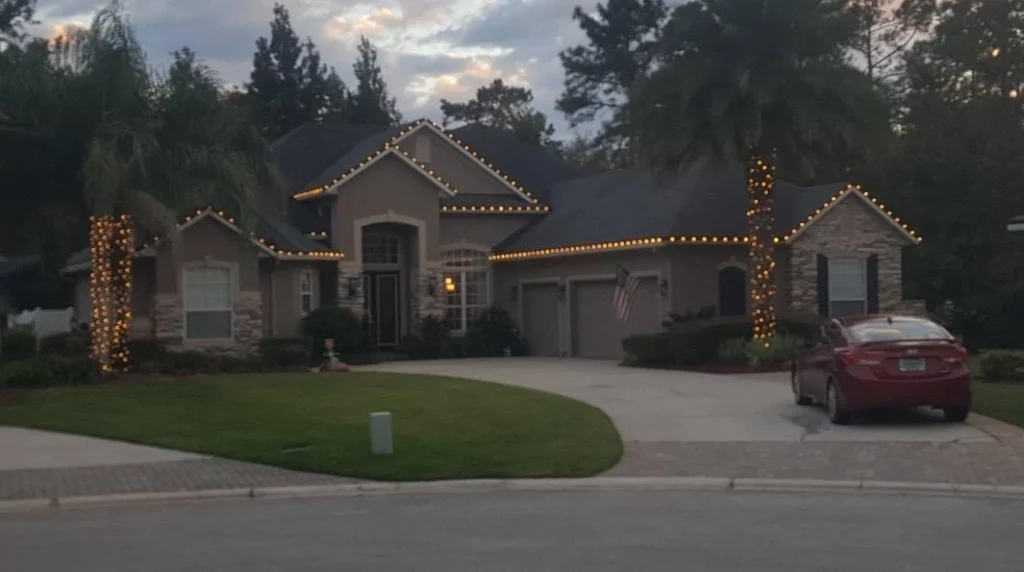
The good news is that HOA rules and a beautiful display aren’t actually in conflict most of the time. Warm white lights along the roofline, well-defined lines on windows and columns, and a tasteful wreath or garland at the entry check every box that architectural review committees care about, while still being the style most homeowners want anyway. Where people tend to run into trouble is with the extras — inflatables in the front yard, projector displays that shift and flash, or strings of mixed colors draped loosely across shrubs. None of that is off-limits everywhere, but it’s exactly the kind of thing that draws a second look from an HOA board, so it’s worth confirming before you commit to a bigger, busier display. A clean, well-installed classic display is almost always the safest bet if you’re not sure what your community allows.
Frequently Asked Questions
If you’re in an HOA community anywhere across Raleigh, Wake Forest, Cary, Durham, Chapel Hill, Youngsville, or Franklinton and want a display that looks great and stays within your neighborhood’s guidelines, reach out early — spots fill up fast once the season gets rolling, and getting your installation scheduled in advance gives us time to design around any rules your community has in place.